Ling Kai

Company: Oceanlink Global Supply Chain, Title: Supply Chain Operations Supervisor, 8‑year hands‑on experience in foreign‑trade logistics. In charge of cross‑border booking, customs clearance coordination and overseas warehouse scheduling. Familiar with GS1 barcodes, product identification and export documents. Liaises with domestic factories and overseas retailers to ensure smooth cross‑border supply‑chain operations.

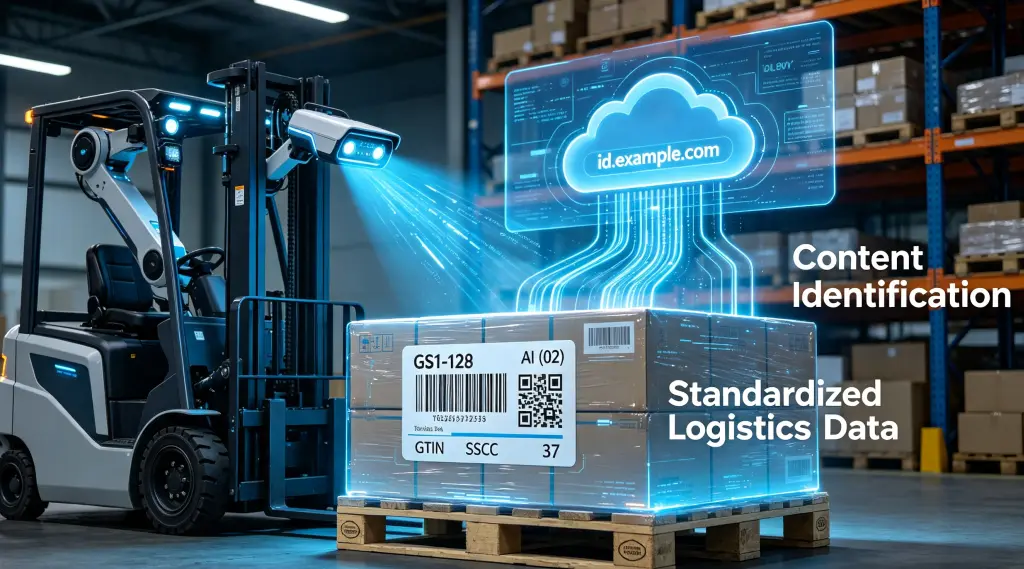
GS1 AI 02 — CONTENT (Content of Trade Item in a Logistic Unit) Technical Whitepaper

This whitepaper is based on the GS1 international standard document GS1 Application Identifier 02 and the GS1 General Specifications. It provides a systematic technical analysis of the definition, encoding structure, combination constraints, GS1 Digital Link implementation, and cross-industry deployment practices of Application Identifier AI 02. AI 02 is specifically used to identify the homogeneous trade item GTIN […]

GS1 AI 02 — CONTENT (Content of Trade Item in a Logistic Unit) Technical Whitepaper Read More »
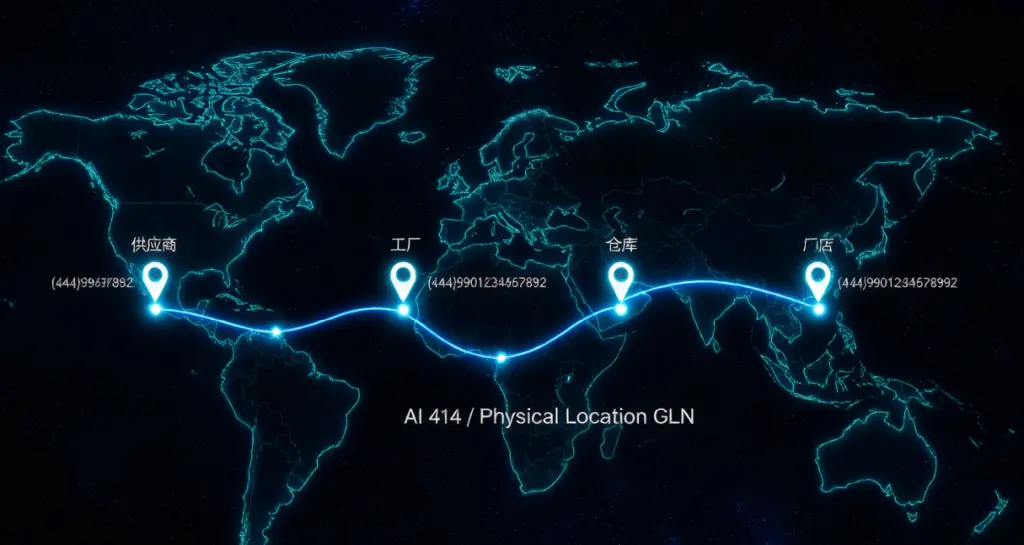
GS1 AI 414 (Physical Location GLN) Technical White Paper: Global Location Identification Standard and Spatial Digitization Practices

In supply chain and physical commerce systems, physical locations serve as core spatial anchors for goods storage, circulation and handover. For a long time, inconsistent internal location coding rules across enterprises have prevented direct mutual recognition of cross-entity and cross-system location information, resulting in inaccurate inventory positioning, low handover efficiency, and missing spatial dimensions in

GS1 AI 414 (Physical Location GLN) Technical White Paper: Global Location Identification Standard and Spatial Digitization Practices Read More »

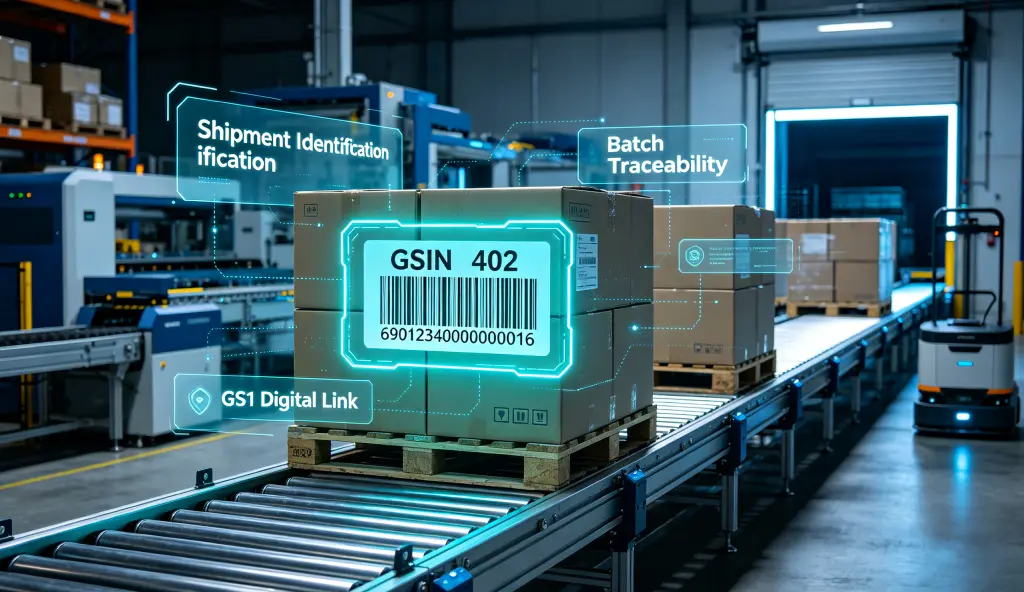
GS1 AI 402 (GSIN) Technical White Paper: Global Shipment Identification Standard and Logistics Handover Traceability Practices

In the supply chain logistics system, shipment is the core business node of goods circulation from the shipper to the consignee. A unified identification for shipment batches is the foundation for collaborative management of the whole outbound, transport and receipt process. For a long time, inconsistent shipment numbering rules across enterprises have led to low

GS1 AI 402 (GSIN) Technical White Paper: Global Shipment Identification Standard and Logistics Handover Traceability Practices Read More »

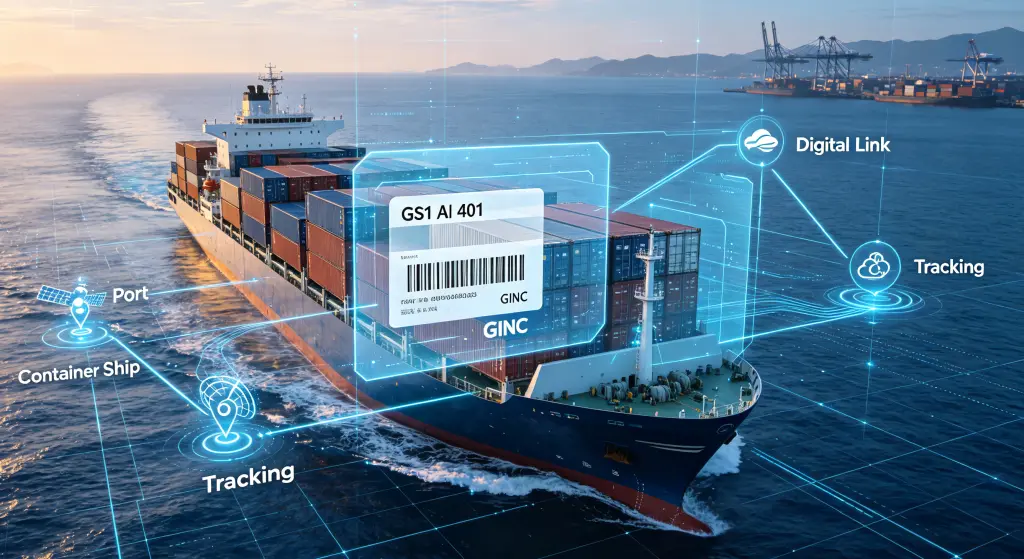
GS1 AI 401 (GINC) Technical White Paper: Global Consignment Identification Standard and End-to-End Logistics Traceability Practices

In the global multimodal transport system, a single consignment often passes through multiple carriers, transport modes and transit nodes before delivery. For a long time, consignment numbering rules have been defined independently by each logistics enterprise, requiring repeated document matching and manual data entry during cross-party handover. This not only drags down efficiency but also

GS1 AI 401 (GINC) Technical White Paper: Global Consignment Identification Standard and End-to-End Logistics Traceability Practices Read More »

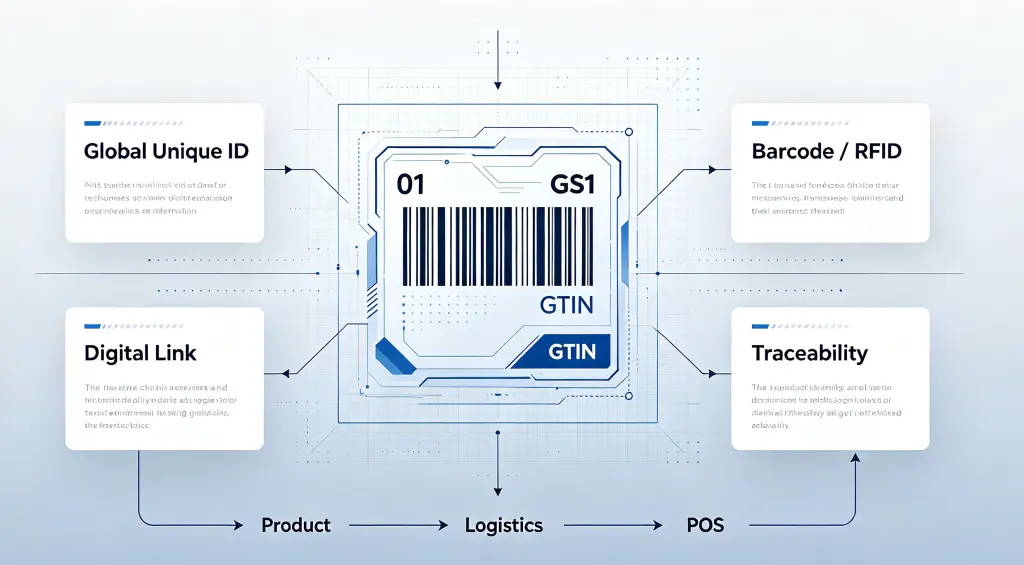
GS1 AI 01 (GTIN) Technical White Paper: Core Standard and Implementation Guide for Global Trade Item Identification

In the global supply chain system, unified identification of trade items is the foundation for automated checkout, inventory management and end-to-end traceability. As a core component of the GS1 global identification system, the Global Trade Item Number (GTIN), carried by GS1 Application Identifier (AI) 01, is currently the most widely adopted product identification standard worldwide.

GS1 AI 01 (GTIN) Technical White Paper: Core Standard and Implementation Guide for Global Trade Item Identification Read More »

GS1 AI 00 (SSCC) Specifications and Applications: The Core Standard for Logistics-Unit-Level Supply Chain Traceability

Accurate identification and tracking of logistics units underpin the efficient operation of warehousing, transportation and last-mile delivery across the supply chain. For a long time, inconsistent logistics coding rules across enterprises and regions have made cross-party handover rely on manual document checking and repeated data entry, dragging down efficiency and introducing errors. As the core

GS1 AI 00 (SSCC) Specifications and Applications: The Core Standard for Logistics-Unit-Level Supply Chain Traceability Read More »

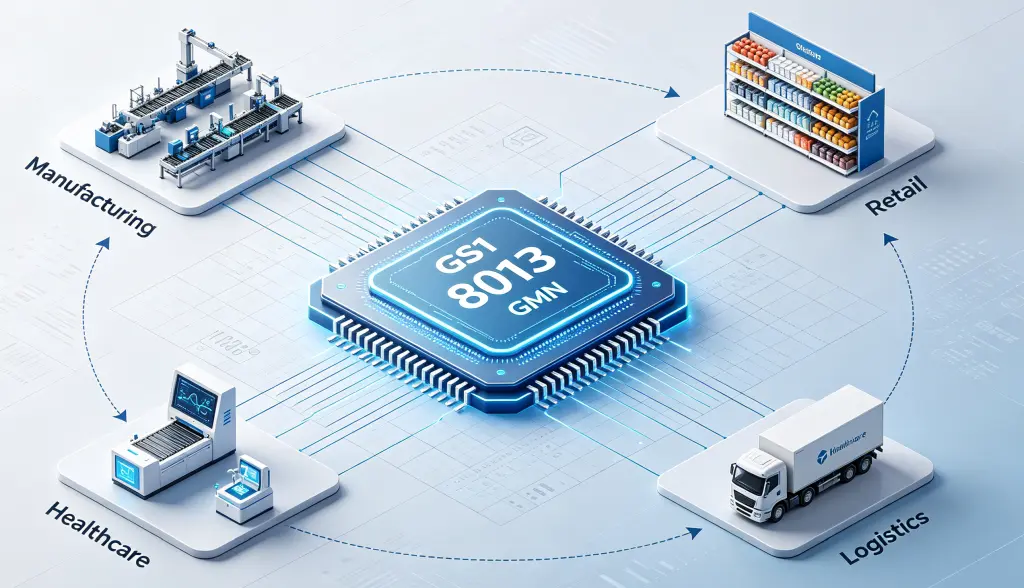
GS1 AI 8013 (Global Model Number, GMN) Deep Dive: Technical Specifications and Industry Applications

Within the GS1 global identification system, the Global Trade Item Number (GTIN) solves the identity recognition problem for individual items and trade units. However, for cross-enterprise unified identification and full-lifecycle management at the product model level, a dedicated standardized coding framework is required. GS1 Application Identifier (AI) 8013, corresponding to the Global Model Number (GMN),

GS1 AI 8013 (Global Model Number, GMN) Deep Dive: Technical Specifications and Industry Applications Read More »

Application of GS1 Digital Link in Retail: From Barcodes to End-to-End Digital Infrastructure

GS1 Digital Link is not merely a “QR code with a link” — it is a standardized URI protocol built on the GS1 global identification system, serving as the core infrastructure connecting physical goods to the digital world in retail. Centered on GTIN (Global Trade Item Number), it upgrades traditional 1D barcodes into a “one

Application of GS1 Digital Link in Retail: From Barcodes to End-to-End Digital Infrastructure Read More »

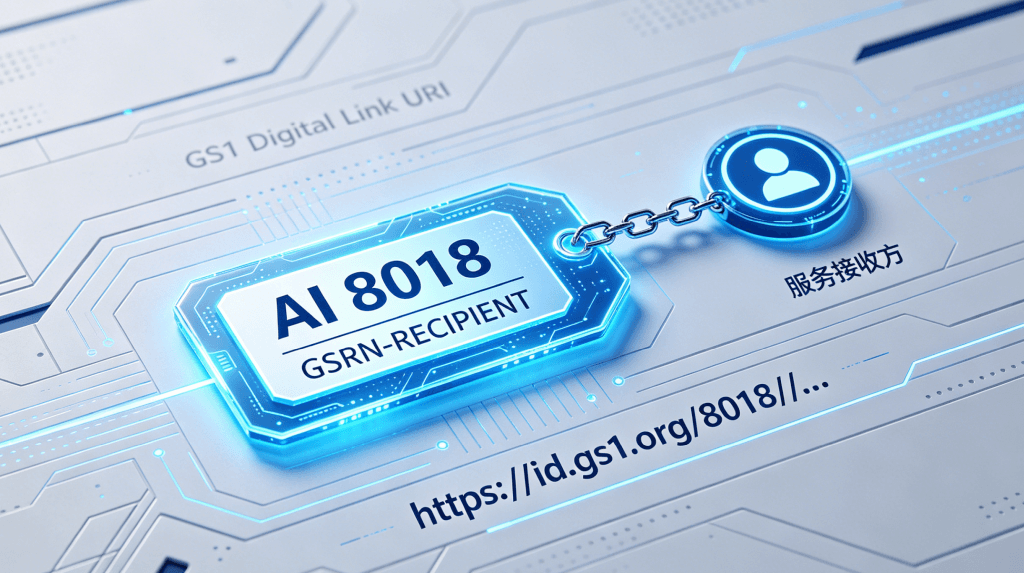
GS1 Digital Link Primary Key: AI 8018 (GSRN‑RECIPIENT)

Within the GS1 Global Identification System, AI 8018 (Global Service Relation Number – Recipient, GSRN‑RECIPIENT) is the core primary identifier exclusively dedicated to service recipients. As a first‑class primary key in the GS1 Digital Link URI ecosystem, it maps offline service relationships into the digital space, enabling globally unique identification, end‑to‑end traceability, and trusted data

GS1 Digital Link Primary Key: AI 8018 (GSRN‑RECIPIENT) Read More »