
GS1 Application Identifiers

GS1 Application Identifiers (AIs) are prefixes used in barcodes and EPC/RFID-tags to define the meaning and format of data attributes. This tool was developed in response to the growing use of AIs in the various industry sectors to include product data beyond the GTIN, such as the batch/lot number, serial number, best before date and expiration date. It also allows users, solution providers and GS1 Member Organisations to easily view, search and share details about individual Application Identifiers through web-browsers or on a mobile device.

GS1 AI 22: Consumer Product Variant

This article focuses on GS1 Application Identifier 22 (Consumer Product Variant, or CPV), covering its definition, format, encoding examples, industry scenarios, and key characteristics. The core content is summarized as follows: I. Definition and Core Function GS1 AI 22 (Consumer Product Variant) is an Application Identifier in the GS1 system used to distinguish different versions […]

GS1 AI 22: Consumer Product Variant Read More »

GS1 Digital Link Compliant Primary Keys

Compiled based on: GS1 Official Application Identifier (AI) Standard, GS1-Conformant Resolver Standard, GS1 Digital Link URI Syntax StandardApplicable Scenarios: GS1 Resolver v3.0 Configuration, GS1 Digital Link URI Construction, Encoding Legitimacy Validation, Supply Chain Identification System Setup Preface This document provides a detailed description of all compliant primary keys in the GS1 Digital Link system, covering

GS1 Digital Link Compliant Primary Keys Read More »

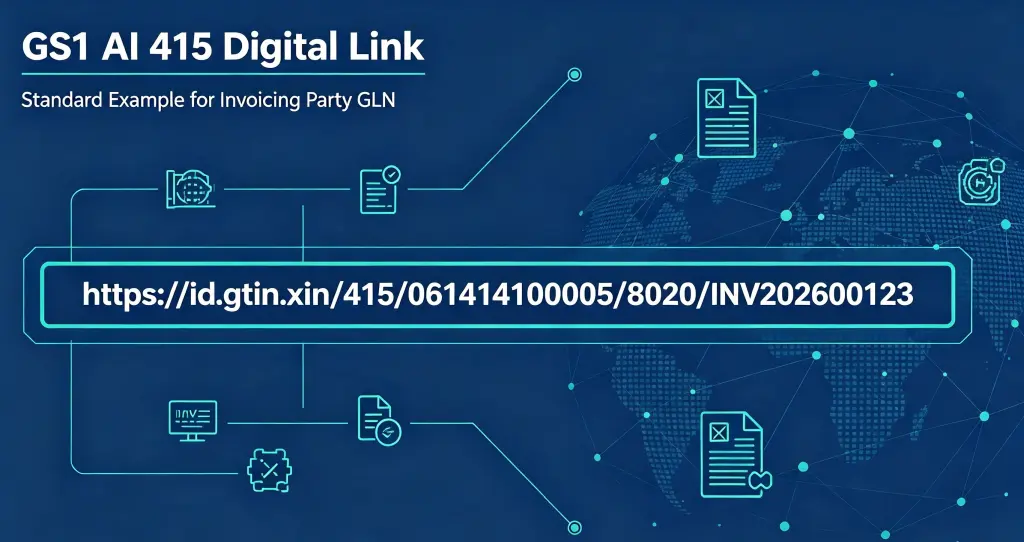
GS1 AI 415 Invoicing Party Global Location Number (GLN) Digital Link Compliance Implementation Guide

Preface This document is compiled in accordance with official GS1 General Specifications, AI 415 standards and GS1 Digital Link V1.4 syntax rules. Targeted at supply chain finance practitioners, barcode implementation engineers and digital traceability specialists, it fully introduces standardized construction methods, coding rules, system invocation protocols and multi-industry implementation solutions for Digital Links carrying AI

GS1 AI 415 Invoicing Party Global Location Number (GLN) Digital Link Compliance Implementation Guide Read More »

GS1 AI 02 — CONTENT (Content of Trade Item in a Logistic Unit) Technical Whitepaper

This whitepaper is based on the GS1 international standard document GS1 Application Identifier 02 and the GS1 General Specifications. It provides a systematic technical analysis of the definition, encoding structure, combination constraints, GS1 Digital Link implementation, and cross-industry deployment practices of Application Identifier AI 02. AI 02 is specifically used to identify the homogeneous trade item GTIN

GS1 AI 02 — CONTENT (Content of Trade Item in a Logistic Unit) Technical Whitepaper Read More »

GTIN (GS1 AI 01 vs AI 02)

Core Conclusion First Although both GS1 AI 01 and AI 02 carry Global Trade Item Number (GTIN), they differ completely in positioning and usage rules: 1. Official Definition & Core Positioning 1.1 AI 01: Global Trade Item Number (GTIN) Per the GS1 General Specifications, AI 01 corresponds to the Global Trade Item Number, the primary

GTIN (GS1 AI 01 vs AI 02) Read More »

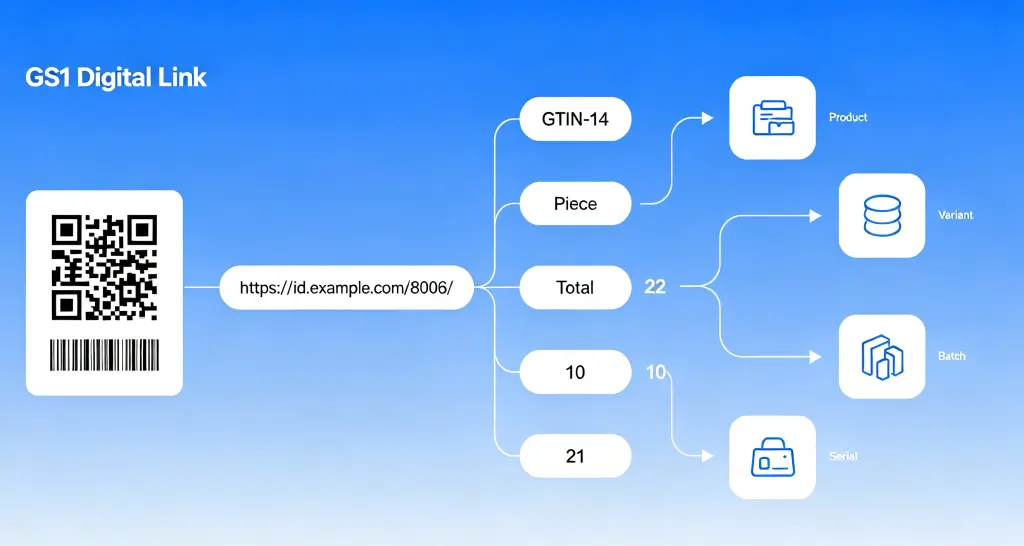
Technical White Paper on GS1 AI 8006 Individual Trade Item Piece Identifier

1. Standard Definition and Analysis 1.1 Official Definition and System Positioning GS1 AI 8006 (Individual Trade Item Piece, ITIP) is an application identifier within the global GS1 standard system, designed to uniquely identify individual components of a trade item. Its official definition is a coding mechanism that assigns unique identifiers to each physically separated component

Technical White Paper on GS1 AI 8006 Individual Trade Item Piece Identifier Read More »

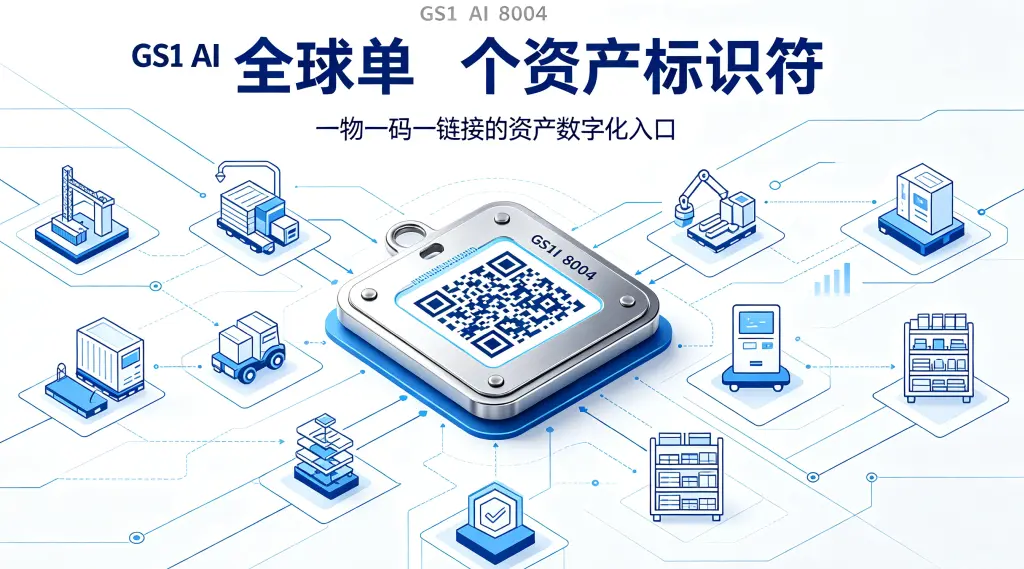
GS1 AI 8004 Global Individual Asset Identifier (GIAI) Technical White Paper

I. Standard Definition and Encoding Specifications 1.1 Official Positioning and Functional Definition The Global Individual Asset Identifier (GIAI) is a standardized coding system within the GS1 system used to uniquely identify individual tangible assets, corresponding to Application Identifier (AI) 8004. Its core positioning is to provide a globally unique, interoperable identity for individual physical assets

GS1 AI 8004 Global Individual Asset Identifier (GIAI) Technical White Paper Read More »

GS1 AI 8003 Global Returnable Asset Identifier (GRAI) Technical Analysis White Paper

1. Standard Definition and Coding Specification 1.1 Official Position and Functional Description The Global Returnable Asset Identifier (GRAI) is the core identification standard for recyclable assets in the GS1 global unified identification system, corresponding to GS1 Application Identifier (AI) 8003. An Application Identifier is a numeric prefix in the GS1 system that defines the meaning,

GS1 AI 8003 Global Returnable Asset Identifier (GRAI) Technical Analysis White Paper Read More »

Key Differences Between GS1 AI 414 and AI 417

According to official GS1 standards, although both Application Identifiers use the 13-digit GLN (Global Location Number), their purposes and semantics are completely different: AI 414: Physical Location Definition: Identifies a physical location – Global Location Number (GLN). Core Purpose: Technical Parameters: Application Scenario Examples: 👤 AI 417: Party Identification (Party GLN) Definition: Party Global Location

Key Differences Between GS1 AI 414 and AI 417 Read More »

GS1 AI 417: Party Global Location Number (GLN) Technical Analysis Whitepaper

1. Standard Definition Analysis 1.1 Normative Definition GS1 Application Identifier (AI) 417 is defined as the “Party Global Location Number” (GLN). Within the GS1 global standards system, its official positioning is to serve as the core identification key for uniquely identifying legal entities, companies, or organizations (i.e., “parties”) participating in transactions across supply chains, Electronic

GS1 AI 417: Party Global Location Number (GLN) Technical Analysis Whitepaper Read More »