
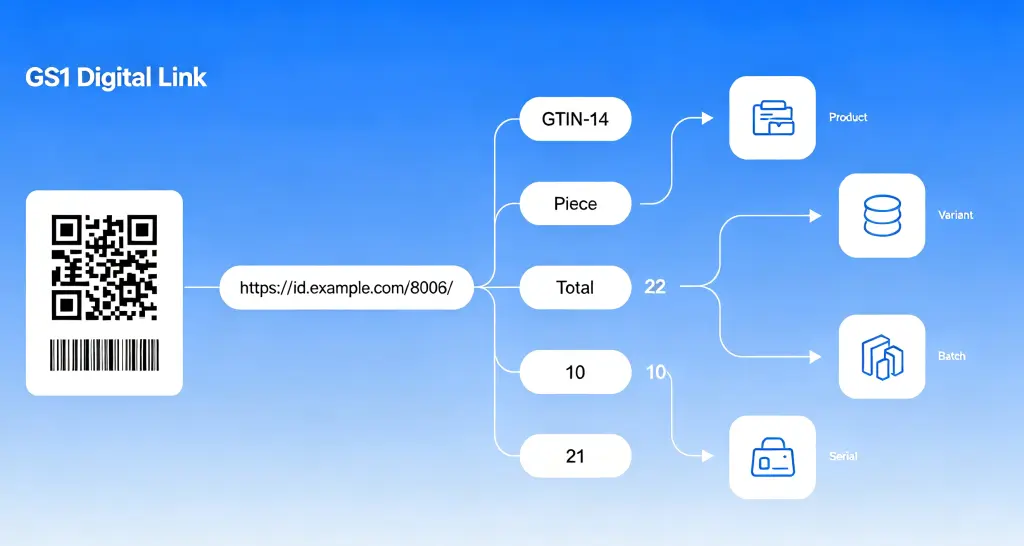
Technical White Paper on GS1 AI 8006 Individual Trade Item Piece Identifier

1. Standard Definition and Analysis 1.1 Official Definition and System Positioning GS1 AI 8006 (Individual Trade Item Piece, ITIP) is an application identifier within the global GS1 standard system, designed to uniquely identify individual components of a trade item. Its official definition is a coding mechanism that assigns unique identifiers to each physically separated component

Technical White Paper on GS1 AI 8006 Individual Trade Item Piece Identifier Read More »
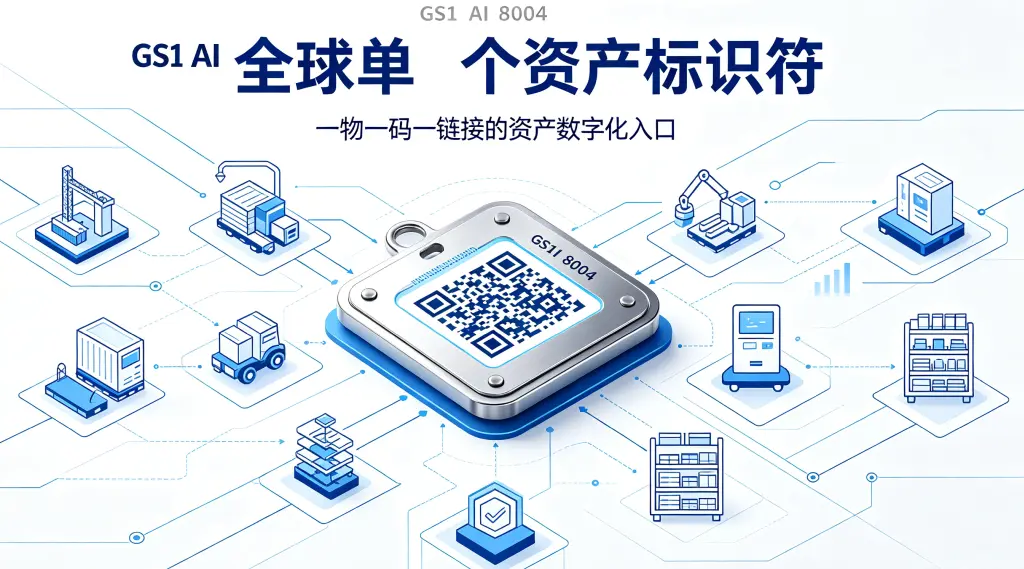
GS1 AI 8004 Global Individual Asset Identifier (GIAI) Technical White Paper

I. Standard Definition and Encoding Specifications 1.1 Official Positioning and Functional Definition The Global Individual Asset Identifier (GIAI) is a standardized coding system within the GS1 system used to uniquely identify individual tangible assets, corresponding to Application Identifier (AI) 8004. Its core positioning is to provide a globally unique, interoperable identity for individual physical assets

GS1 AI 8004 Global Individual Asset Identifier (GIAI) Technical White Paper Read More »

GS1 AI 8003 Global Returnable Asset Identifier (GRAI) Technical Analysis White Paper

1. Standard Definition and Coding Specification 1.1 Official Position and Functional Description The Global Returnable Asset Identifier (GRAI) is the core identification standard for recyclable assets in the GS1 global unified identification system, corresponding to GS1 Application Identifier (AI) 8003. An Application Identifier is a numeric prefix in the GS1 system that defines the meaning,

GS1 AI 8003 Global Returnable Asset Identifier (GRAI) Technical Analysis White Paper Read More »

Key Differences Between GS1 AI 414 and AI 417

According to official GS1 standards, although both Application Identifiers use the 13-digit GLN (Global Location Number), their purposes and semantics are completely different: AI 414: Physical Location Definition: Identifies a physical location – Global Location Number (GLN). Core Purpose: Technical Parameters: Application Scenario Examples: 👤 AI 417: Party Identification (Party GLN) Definition: Party Global Location

Key Differences Between GS1 AI 414 and AI 417 Read More »

GS1 AI 417: Party Global Location Number (GLN) Technical Analysis Whitepaper

1. Standard Definition Analysis 1.1 Normative Definition GS1 Application Identifier (AI) 417 is defined as the “Party Global Location Number” (GLN). Within the GS1 global standards system, its official positioning is to serve as the core identification key for uniquely identifying legal entities, companies, or organizations (i.e., “parties”) participating in transactions across supply chains, Electronic

GS1 AI 417: Party Global Location Number (GLN) Technical Analysis Whitepaper Read More »

GS1 AI 414 (Physical Location GLN) Technical White Paper: Global Location Identification Standard and Spatial Digitization Practices

In supply chain and physical commerce systems, physical locations serve as core spatial anchors for goods storage, circulation and handover. For a long time, inconsistent internal location coding rules across enterprises have prevented direct mutual recognition of cross-entity and cross-system location information, resulting in inaccurate inventory positioning, low handover efficiency, and missing spatial dimensions in

GS1 AI 414 (Physical Location GLN) Technical White Paper: Global Location Identification Standard and Spatial Digitization Practices Read More »

GS1 AI 402 (GSIN) Technical White Paper: Global Shipment Identification Standard and Logistics Handover Traceability Practices

In the supply chain logistics system, shipment is the core business node of goods circulation from the shipper to the consignee. A unified identification for shipment batches is the foundation for collaborative management of the whole outbound, transport and receipt process. For a long time, inconsistent shipment numbering rules across enterprises have led to low

GS1 AI 402 (GSIN) Technical White Paper: Global Shipment Identification Standard and Logistics Handover Traceability Practices Read More »

GS1 AI 401 (GINC) Technical White Paper: Global Consignment Identification Standard and End-to-End Logistics Traceability Practices

In the global multimodal transport system, a single consignment often passes through multiple carriers, transport modes and transit nodes before delivery. For a long time, consignment numbering rules have been defined independently by each logistics enterprise, requiring repeated document matching and manual data entry during cross-party handover. This not only drags down efficiency but also

GS1 AI 401 (GINC) Technical White Paper: Global Consignment Identification Standard and End-to-End Logistics Traceability Practices Read More »

GS1 AI 255 (GCN) Technical White Paper: Global Coupon Number Standard and Digital Marketing Practices

In the global retail and fast-moving consumer goods industry, coupons are a core marketing tool to drive sales and boost customer repurchase rates. However, the long-standing lack of unified coupon coding rules has led to cross-platform redemption difficulties, high fraud risks and fragmented data. As a dedicated standard of the GS1 global identification system for

GS1 AI 255 (GCN) Technical White Paper: Global Coupon Number Standard and Digital Marketing Practices Read More »

GS1 AI 253 (GDTI) Technical White Paper: Standard Specifications and Digital Practices for Global Document Type Identifier

In the global supply chain system, trade documents, compliance certificates and technical reports are core carriers of business circulation and compliance governance. For a long time, the lack of globally unified standards for document identification has made cross-enterprise and cross-system document verification rely on manual checking, resulting in low efficiency, high error rates and traceability

GS1 AI 253 (GDTI) Technical White Paper: Standard Specifications and Digital Practices for Global Document Type Identifier Read More »