Today, more and more consumers scan product barcodes with their smartphones to learn about ingredients, usage instructions or promotional offers. However, most existing product QR codes use proprietary URI encoding formats that only support a single, fixed experience. Brands often have to print multiple barcodes on packaging to serve checkout, traceability and marketing purposes separately, driving up packaging costs and causing consumer confusion.
What Is GS1 Digital Link?
Released by GS1 US, the brand-focused guide outlines how GS1 Digital Link delivers a globally unified, standardized encoding system that allows a single barcode to serve both consumer engagement and supply chain operations, serving as the core foundational solution for brands’ product digital transformation.
1. Core Benefits of GS1 Digital Link for Brands
Enhanced Consumer Engagement Experiences
GS1 Digital Link carries richer product content, including detailed ingredient and allergen information, product usage tips, and related product recommendations. It evolves from a simple redirect link into a multi-functional brand service gateway, meeting consumers’ growing demand for product transparency.
Simplified Packaging & Reduced Operational Costs
Brands can eliminate redundant multiple labels and barcodes on a single product package. One standardized identifier covers all business scenarios, significantly reducing packaging design complexity and the operational cost of managing multiple code systems.
Streamlined Authentication & End-to-End Traceability
Built on GS1’s globally unique product identification system, brands can use a single identifier to track products throughout the entire supply chain — from manufacturing to point of purchase. This enables more efficient product authenticity verification, protecting brand reputation and consumer rights.
Optimized B2B Collaboration & Supply Chain Efficiency
The standardized identification system enables seamless data sharing across trading partners, powering a wide range of operational capabilities: from streamlined batch recall management to automated price adjustments based on product expiration dates, driving overall supply chain efficiency.
2. How GS1 Digital Link Works
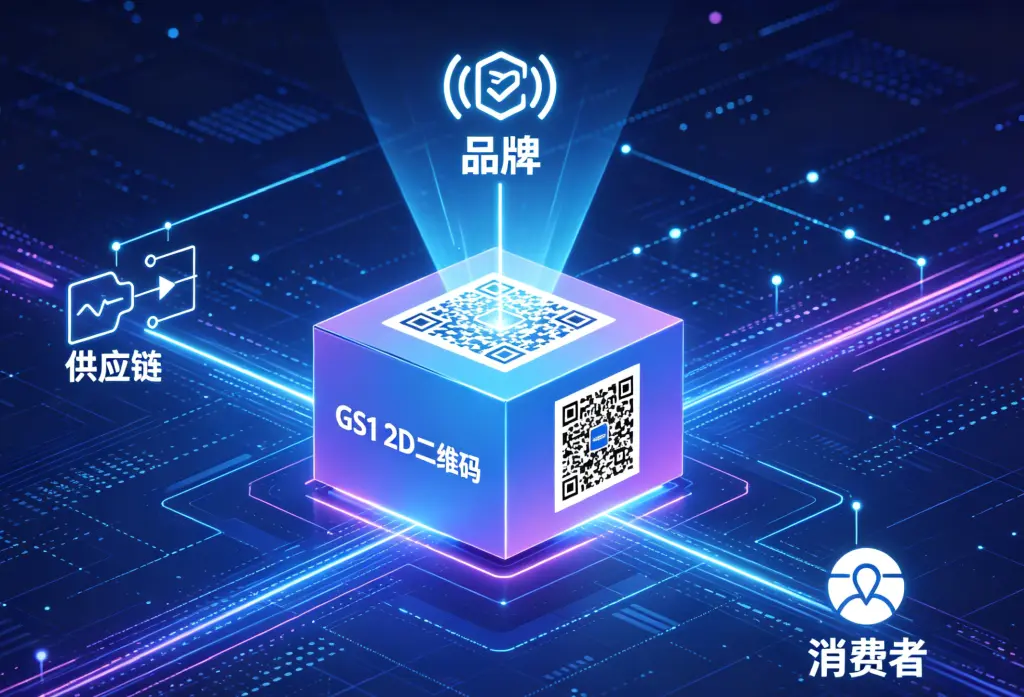
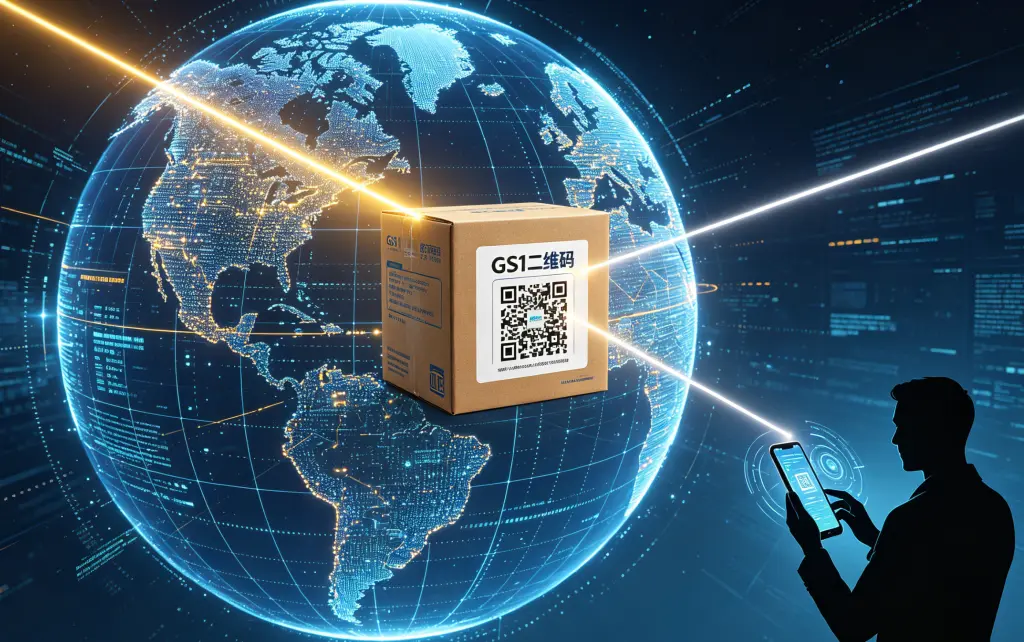
The core logic of GS1 Digital Link is “one code for all uses, context-aware delivery”: the same 2D data carrier (such as a QR code) directs both consumer smartphone scans and retailer point-of-sale (POS) scans to an intelligent product identity hosted in the cloud. The system automatically matches relevant digital content and services based on the scanner’s role and use case, elevating consumer experiences while boosting supply chain efficiency and product safety.
3. Core Steps for Brands to Implement GS1 Digital Link
Deploying GS1 Digital Link does not require complex overhauls. Brands can complete foundational rollout in three steps:
Step 1: Create Digital Identifiers for Priority Products
First, select high-priority products for initial rollout based on business needs. Using the GS1 global identification system (Global Trade Item Number, GTIN), generate a digital identity for each product that complies with GS1 Digital Link syntax standards. The solution supports both SKU-level product identification and item-level serialization for granular unique-item tracking.
Step 2: Select Suitable Data Carriers & Integrate into Packaging
The GS1 Digital Link standard is data carrier-agnostic, allowing brands to choose the optimal carrier for their use cases:
- For consumer engagement scenarios, visual scannable carriers such as QR codes or Data Matrix are recommended, compatible with standard smartphone cameras.
- For warehouse and supply chain management scenarios, non-line-of-sight carriers such as NFC and RFID are supported.
- Multiple carrier types can be combined, with one unified identification system covering the full value chain from production and logistics to point of sale.
Step 3: Elevate Experiences for Both Consumers and Retailers
This is the core stage for unlocking the full value of GS1 Digital Link. By bridging physical products with digital services, brands can effectively boost customer loyalty:
- For consumers (B2C): Users can access comprehensive product information via smartphone scan, including detailed product descriptions, promotions, sustainability information, and FAQs, enabling personalized brand interactions.
- For retailers (B2B): POS scans trigger real-time alerts for product recalls, expiration, or counterfeit risks. Back-office teams can leverage scan data to optimize inventory management and access critical product documentation such as safety manuals.
Closing
GS1 Digital Link enables brands to build trusted, direct connections with consumers through a single smart barcode on packaging. It delivers authoritative, reliable product information and richer personalized experiences, while driving supply chain operational efficiency — offering brands a standardized, global path to product digitization.