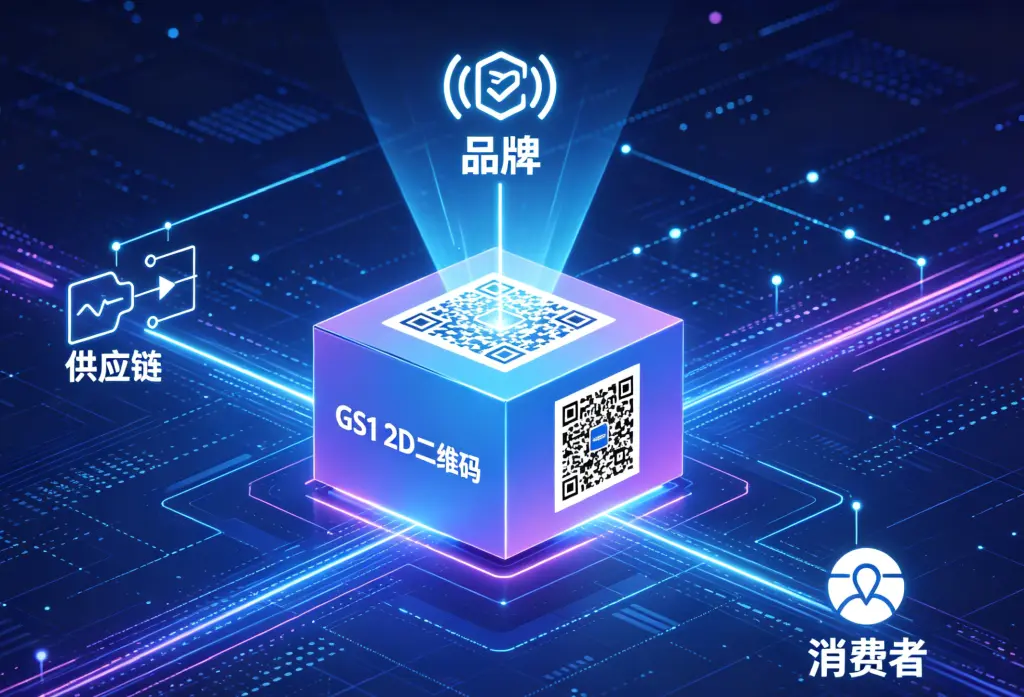
If you have bought anything over the past few years, you have most likely seen it — that larger, square‑shaped QR code printed on product packaging. It may appear on the back of a coffee bag, the side of a shampoo bottle, or the bottom of a medicine box.
This is no ordinary QR code. Behind it lies a global standard that is redefining what “product labelling” means: GS1 Digital Link.
From a String of Digits to an Access Gateway
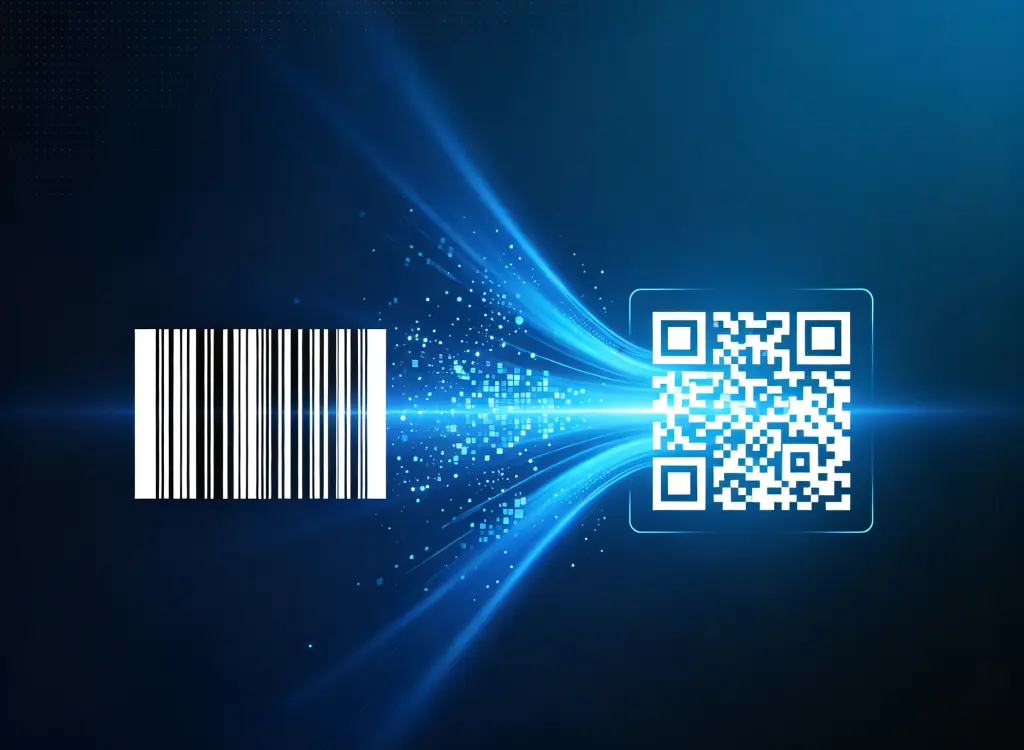
Traditional one‑dimensional barcodes (UPC/EAN) have served global retail for nearly half a century. Their function is simple: to identify what a product is. When scanned at checkout, the system recognises that it is a 500‑ml bottle of shampoo and retrieves its price.
Yet that is where their capability ends.
Traditional barcodes only carry a string of numbers. They cannot tell you whether the shampoo is organic, where its ingredients are sourced, how to recycle its packaging, or whether there are latest safety alerts. Consumers want more information, yet packaging offers limited physical space. One survey shows that 81 % of UK consumers wish to receive more product information than is available on‑pack, and three‑quarters regard transparency as key to building brand trust.
Brands responded by printing multiple codes on packaging: one for checkout, one for consumers to access details, one for supply‑chain traceability, and another for loyalty‑programme points.
The outcome? Cluttered packaging and growing consumer confusion.
GS1 Digital Link was created to put an end to this fragmentation.
What Is GS1 Digital Link?
Put simply, GS1 Digital Link is a standardised method for encoding GS1 identifiers (such as the GTIN product code) into a web address (URL).
Sounds abstract? Here is a simpler explanation:
A traditional barcode outputs a string of digits, which a scanner looks up in a database to identify the item. GS1 Digital Link is a web address that opens a webpage upon scanning — but this webpage is not fixed. Instead, it dynamically delivers different content depending on who scans it, which device is used, and in what context the scan takes place.
Scanned at checkout, it completes the payment transaction. Scanned by a consumer’s smartphone, it displays product specifications, nutritional facts, usage videos and recycling instructions. Scanned by supply‑chain partners, it returns batch numbers, expiry dates and logistics data.
One single code fulfils all requirements.
This is the core design of GS1 Digital Link: the URI encodes identifiers such as GTIN, and may carry additional granular information including batch number, serial number and expiry date. A resolver routes the same identifier to different information sources according to request context. Brands may update content behind the link at any time, without altering physical packaging.
Why It Represents the Future of Product Labelling
1. Sunrise 2027: A Unified Global Retail Initiative
At the end of 2020, GS1 launched its global 2D barcode migration programme. In February 2023, at the GS1 Global Forum in Brussels, GS1 formally announced Sunrise 2027: by the end of 2027, retailers worldwide will possess the capability to scan two‑dimensional barcodes (QR codes and DataMatrix codes).
This means that by 2027, GS1‑Digital‑Link‑enabled QR codes will be widely accepted at retail check‑outs globally. Traditional one‑dimensional barcodes may be completely removed from product packaging, leaving only one QR code.
This is not an experiment by individual brands or countries; it represents a unified upgrade across global supply chains.
2. One Code, Endless Possibilities
The most immediate change brought by GS1 Digital Link is that only one code is required on‑pack.
This single code serves multiple purposes:
- Retail checkout, operating as fast and reliably as legacy barcodes
- Consumer‑brand interaction: scan to view product details, nutritional information, usage instructions, certification documents, brand storytelling and promotional campaigns
- Supply‑chain traceability: instant visibility over batch numbers, expiry dates, place of origin and logistics records
- Regulatory compliance: meeting emerging legal requirements for digital disclosure such as the Digital Product Passport (DPP)
3. Information That Never Becomes Out‑of‑Date
Once printed, information on conventional packaging becomes static. GS1 Digital Link works differently: the physical code remains unchanged, yet the content behind it can be refreshed anytime.
Product recall? Update the landing page instantly so anyone scanning receives the notification. New certification obtained? Add a link pointing to the certification page. Formula revision? Synchronise nutritional data in real‑time.
No packaging re‑print is needed to keep information current.
4. Context‑Aware Content Delivery for Different Users
GS1 Digital Link supports context‑driven content delivery. The same QR code behaves differently for different users:
- Clinical professionals scanning access prescription information and clinical‑study datasets
- Patients scanning receive plain‑language medication guidance and FAQs
- General consumers scanning see product descriptions and brand narratives
- Retail checkout scanners process transaction workflows
Different users scanning the identical code receive content optimised for their respective needs.
Two Real‑World Scannable Examples
GS1 Digital Link is not merely a theoretical concept. The two links below comply with the GS1 Digital Link standard and may be opened directly via smartphone cameras, WeChat or any GS1‑compliant scanning tool:
https://id.gtin.xin/01/07612345003993https://id.gtin.xin/01/07612345001104
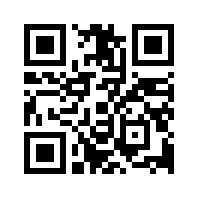
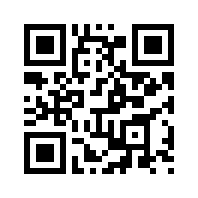
The first link carries GTIN 07612345003993; the second carries GTIN 07612345001104. Upon scanning, the resolver automatically returns appropriate content according to scanner role, device type and geographical location:
- Checkout‑system scan: returns pricing and transaction data
- Consumer smartphone scan: returns product specifications, nutritional facts and brand stories
- Supply‑chain PDA scan: returns batch numbers, expiry dates and logistics milestones
- Physician/pharmacist‑terminal scan: returns compliance documentation and clinical‑research data
One URI delivering differentiated pages to different parties. This marks the fundamental distinction between GS1 Digital Link and traditional barcodes.
It Is Already Happening
GS1 Digital Link is no longer confined to presentation slides.
Mondelēz International ran a GS1 Digital Link QR‑code pilot for its Saiwa product line in Italy, linking product identifiers to batch and expiry information while delivering product, sustainability and disposal guidance to consumers.
Ireland’s Kinsale Mead became the country’s first brand to deploy GS1 QR codes, connecting every bottle of mead to its dedicated product webpage.
The Nature of Things, an Irish producer of natural essential oils and fragrances, leverages GS1 QR codes to share in‑depth product information with consumers.
Within China, GS1 Digital Link has been incorporated into national standards, and the National QR Code Comprehensive Service Platform is operational.
More importantly, ISO/IEC 18975:2024 international standard has incorporated GS1 Digital Link, specifying methodologies for combining globally unique identifiers with URLs. This means GS1 Digital Link is no longer an internal GS1 specification but a globally‑recognised international standard.
Actions Brands Should Take Right Now
Sunrise 2027 is not an end‑point; it is a starting point.
For brands, embracing GS1 Digital Link today delivers these benefits:
- Streamlined packaging design: replace multiple codes with one and free up valuable packaging real‑estate
- Lower compliance costs: update information without re‑printing packaging
- Enhanced consumer trust: transparent, verifiable product information builds brand loyalty
- Smarter supply chains: real‑time data sharing, precise traceability and efficient recall workflows
- Rich first‑party data: insights into what consumers view and which content interests them after scanning
GS1 has provided clear industry roadmaps and technical standards. The full technology stack covering QR‑code generation, resolver deployment and label printing is mature. The question is no longer “whether to adopt”, but “when to begin”.
The Next Chapter for Product Labelling
Over the past four decades, the product label has been a string of numbers — nothing more than product identification.
Over the coming decade, the product label will evolve into a gateway: connecting consumers, supply chains, and every interaction between brands and the world.
GS1 Digital Link transforms the “label” from static identification into dynamic connectivity. It is not merely a technical option; it represents the new normal toward which global retail is collectively advancing.
By 2027, when retail check‑outs worldwide are QR‑code‑ready, brands still relying on legacy barcodes will discover that consumers are not abandoning them — the whole industry has moved forward.
The next decade for product labelling starts with that QR code you scan.