1. What is gs1:allergenInfo?
1.1 Official Standard Definition
gs1:allergenInfo is a standardized link type defined in the GS1 Web Vocabulary, with the official definition: a link to a description of the allergens in the product.
It belongs to the GS1 Digital Link ecosystem, alongside gs1:nutritionalInfo (nutritional information), gs1:ingredientsInfo (ingredient information) and gs1:certificationInfo (certification information). As one of the four core digital information entry points for food and beverage products, it addresses the digital disclosure requirements mandated by global allergen labeling regulations including EU Regulation 1169/2011 and China GB 7718-2025.
1.2 Detailed Core Technical Specifications
(1) System Positioning
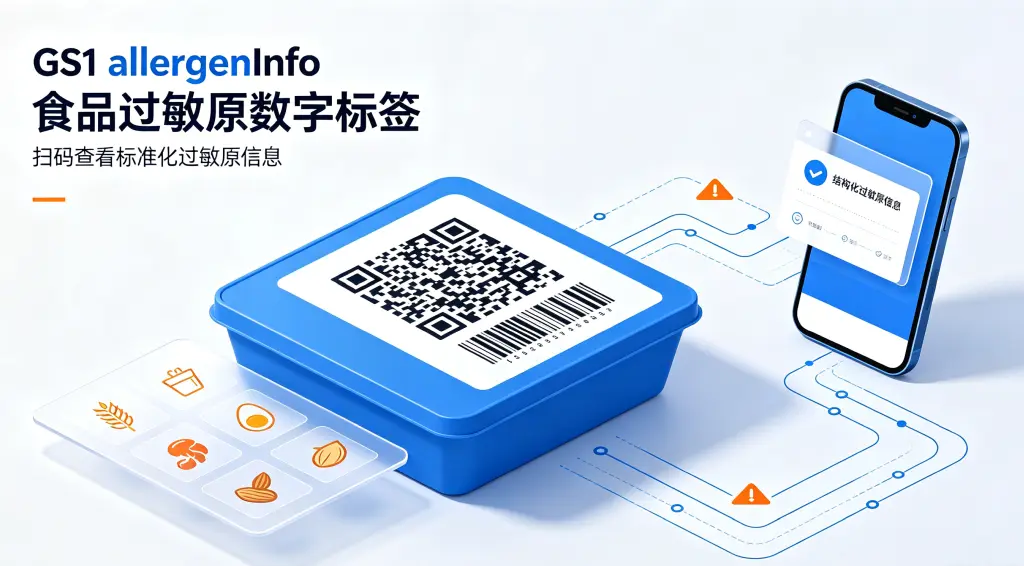
The GS1 Digital Link is built upon the Global Trade Item Number (GTIN), a unique global product identifier. By embedding the standardized relational identifier rel=allergenInfo within QR codes and linear barcodes, consumers scanning the code are directed to structured allergen electronic labels (e-labels), rather than generic unstructured web pages.
(2) Coordination with Supporting Standard Vocabularies
gs1:allergenInfo cannot function independently. Complete data representation relies on GS1’s official allergen coding system:
- gs1:AllergenTypeCode: A globally unified allergen code library covering 8 mandatory allergen categories stipulated by Chinese national standards (milk, egg, peanut, soybean, wheat gluten, tree nuts, crustaceans, fish), plus regionally regulated allergens such as sesame and celery. Each allergen is assigned a unique CURIE code (e.g., milk:
gs1:AllergenTypeCode-MLK, shrimp:gs1:AllergenTypeCode-CRU). - levelOfContainmentCode: A code set classifying the presence level of allergens into three categories: intentionally contained, potentially present via cross-contamination during production, and completely free from. This resolves the ambiguity of vague disclaimers like “may contain nuts” printed on traditional packaging.
(3) Data Format Constraints
- Compatible with three structured data formats: JSON-LD, TTL and XML, supporting e-commerce platforms, enterprise traceability systems and mobile mini-programs.
- Mandatory multilingual support (Chinese and English as baseline). Export food products can load allergen statements compliant with regulations in the EU, Southeast Asia, North America and other regions simultaneously.
- Allergen data is traceably bound to GTIN, production batch numbers and production line IDs, enabling one-click retrieval of raw material and production environment records in the event of an allergic incident.
(4) Usage Rules
Multiple allergenInfo links can be associated with a single product Digital Link: simplified quick-reference versions optimized for mobile viewing, full compliance documents including test reports and production line sanitation records, and dedicated risk warnings for children or consumers with severe allergies.
2. Core Value & Significance of gs1:allergenInfo for Food Safety and Consumers
2.1 For Consumers With Allergies: Eliminate Information Asymmetry and Prevent Life-Threatening Risks
Food allergies may trigger mild reactions including rashes and vomiting, or severe anaphylaxis that can be fatal. Traditional paper packaging suffers three critical limitations: limited print space, tiny font sizes, and ambiguous cross-contamination disclaimers.
- gs1:allergenInfo leverages QR codes to carry comprehensive data that fully documents both intentionally added allergens and cross-contamination risks across production lines, clearly distinguishing between deliberate formulation inclusion and trace residual risks.
- Standardized coding enables automatic filtering via shopping applications. Users with milk allergies can instantly exclude all products tagged with
AllergenTypeCode-MLK, with consistent recognition across online marketplaces and physical supermarkets. - Cross-border food purchases are no longer hindered by language barriers. The universal standardized coding eliminates the need for manual translation of foreign ingredient lists on imported snacks.
2.2 For Food Manufacturers: Simplify Compliance and Unify Global Export Data Standards
- Unified declaration for multi-jurisdictional regulations: A single set of gs1:allergenInfo structured data satisfies labeling requirements of China GB 7718, EU 1169 and US FDA allergen rules, eliminating redundant label documentation tailored to individual markets.
- Digitization replaces supplementary printed warning stickers: Small and medium food manufacturers avoid frequent packaging reprints when reformulating recipes or switching production lines; allergenInfo documentation can be updated digitally at low cost.
- Accelerated traceability during food safety incidents: In response to allergy complaints, GTIN-linked allergenInfo data enables fast access to raw material procurement logs, daily production line sanitation records and allergen residue test reports, shortening regulatory investigation timelines.
2.3 For Retailers, Caterers and Regulators: Standardized Data Connects the Entire Industrial Chain
- Supermarket retail: Standardized allergen data can be read uniformly across online stores, self-checkout terminals and shelf QR codes, triggering automatic pop-up risk alerts for relevant products.
- Catering industry: Pre-packaged semi-finished meals embedded with gs1:allergenInfo allow kitchen staff to scan and verify allergen profiles, avoiding cross-serving risks for dine-in customers.
- Market supervision: Regulatory platforms can batch-import standardized allergen data to automatically screen products with missing or incorrect allergen disclosures, boosting inspection efficiency.
2.4 Long-Term Industry Value: Build a Globally Unified Digital Trust Framework for Food Allergen Disclosure
Prior to the adoption of the gs1 standard, allergen labeling formats varied drastically across manufacturers and countries. Some packaging only stated “contains milk”, while others omitted cross-contamination risks for tree nuts, preventing automated identification and filtering by apps and mini-programs. gs1:allergenInfo enables interoperable data through globally unified vocabulary, forming the foundational infrastructure for digital food labeling, intelligent traceability and transparent consumption.
3. Typical Industry Implementation Cases Across Production, Retail and Catering
Case 1: Pre-Packaged Food Factory (Cookie Production Line With Nut Cross-Contamination Risks)
A domestic cookie manufacturer produces both peanut-flavored and plain cookies on shared mixing and dough-making equipment. Traditional packaging only includes small-print disclaimers reading “may contain peanuts”. Implementation solution with gs1:allergenInfo:
- GS1 Digital Link QR codes printed on cookie packaging configured with the
allergenInforelational attribute. - Structured allergen documents uploaded to the backend: wheat, egg and milk as intentional formulation allergens; peanuts as cross-contamination risk allergens, tagged with
levelOfContainmentCode-POSSIBLE(potentially present in trace amounts). - Consumers scan the code to access full disclosure documentation, including daily production line sanitation protocols, peanut protein residue threshold test data, and explicit warnings for consumers with severe peanut allergies.
- E-commerce platforms integrate GS1 data interfaces to automatically hide this product from users who flag peanut allergies in their account settings.
Case 2: Imported Alcohol Retail (Wine & Fruit Wine Subject to Mandatory EU Allergen Labeling)
EU regulations mandate allergen disclosure for wine, including sulfites, milk and egg derivatives. Glass wine bottles lack sufficient surface area for full printed disclosures. European wineries deploy gs1:allergenInfo as follows:
- Bottle QR codes link to allergenInfo resources hosting EU-compliant electronic labels.
- Data separately categorizes two allergen types: sulfites added during fermentation, and trace milk protein contact from shared fermentation equipment.
- Scanning devices in domestic import supermarkets and online storefronts retrieve bilingual Chinese-English allergen statements. Customs clearance declarations directly import standardized GS1 data to streamline import documentation.
Case 3: Chain Catering Pre-Packaged Meal Supply Chain (Takeaway Ready Meals)
A national hot pot chain central kitchen mass-produces beef, lamb and seafood ready-to-cook meal packs. In-store staff cannot manually memorize all allergen profiles for every ingredient variant. gs1:allergenInfo application workflow:
- GS1 QR codes linked to allergenInfo printed on both outer cartons and individual meal pack packaging.
- Kitchen staff scan codes to view pop-up allergen summaries: seafood packs contain crustacean and fish allergens; beef/lamb broths are nut-free but processed on equipment shared with soybean products.
- The brand’s customer ordering mini-program synchronizes allergenInfo data, triggering proactive risk alerts for diners who have recorded food allergy profiles, drastically reducing dine-in allergy complaints.
Case 4: Cross-Border Infant Milk Powder Exporter
Infant populations face the highest risk of severe allergic reactions, with strict allergen labeling rules enforced across global infant food markets. The manufacturer adopts gs1:allergenInfo for unified global compliance reporting: One standardized set of allergenInfo structured data generates region-specific disclosures compliant with Chinese, Southeast Asian and Australian labeling rules. Documentation includes milk protein from raw milk sources, soybean lecithin formulations, and production line nut isolation control records. Regulators in all target markets can directly parse the standardized coding without manual translation and review.
4. Complete JSON-LD Example Compliant With gs1:allergenInfo Standard
This sample contains full structured allergen data for wheat cookies, fully aligned with the GS1 Web Vocabulary definitions and embeddable directly into GS1 Digital Link electronic labels:
{
 "@context": {
 "gs1": "https://ref.gs1.org/voc/",
 "xsd": "http://www.w3.org/2001/XMLSchema#"
 },
 "@type": "gs1:Product",
 "gs1:gtin": "69123456789015",
 "gs1:allergenInfo": [
 {
 "@type": "gs1:AllergenStatement",
 "gs1:allergenType": [
 { "@id": "gs1:AllergenTypeCode-WHT", "rdfs:label": "Wheat (gluten-containing cereals)" },
 { "@id": "gs1:AllergenTypeCode-MLK", "rdfs:label": "Milk and dairy products" },
 { "@id": "gs1:AllergenTypeCode-EGG", "rdfs:label": "Eggs and egg products" }
 ],
 "gs1:levelOfContainment": {
 "@id": "gs1:ContainmentCode-CONTAINS",
 "rdfs:label": "Intentionally included in product formulation"
 },
 "gs1:allergenDescription": "This product’s formulation directly incorporates wheat flour, whole milk powder and whole liquid egg, which are mandatory labeled allergens per regulatory standards."
 },
 {
 "@type": "gs1:AllergenStatement",
 "gs1:allergenType": [
 { "@id": "gs1:AllergenTypeCode-PNT", "rdfs:label": "Peanuts and peanut derivatives" }
 ],
 "gs1:levelOfContainment": {
 "@id": "gs1:ContainmentCode-POSSIBLE",
 "rdfs:label": "Potential trace residues from cross-contamination on shared production lines"
 },
 "gs1:allergenDescription": "Peanut-flavored cookies are manufactured on the same shared production equipment; complete elimination of trace peanut protein residues cannot be guaranteed. This product is strictly off-limits for individuals with severe peanut allergies."
 }
 ],
 "gs1:allergenDocUrl": "https://brand-food.com/allergen/69123456789015.pdf",
 "gs1:labelStandard": ["GB 7718-2025", "EU 1169/2011"]
}
Code Explanation
@contextdeclares the official GS1 vocabulary namespace to enable machine-readable identification of all standardgs1:allergenInfofields.gs1:gtinbinds the structured allergen data to a globally unique product barcode ID, creating a one-to-one mapping between allergen records and physical goods.- Two separate
AllergenStatementblocks distinguish allergens intentionally added to the formulation versus trace allergens introduced via production line cross-contamination, fully complying with the levelOfContainmentCode technical specification. allergenDocUrllinks to the full official compliance test document referenced by the allergenInfo resource.- Dual regulatory references cover domestic Chinese national standards and EU international regulations, supporting both domestic sales and cross-border export scenarios.
5. Conclusion
gs1:allergenInfo is far more than a simple QR code link identifier. It delivers an end-to-end digital allergen disclosure solution covering standardized coding, structured data formatting, consumer-facing display, product traceability and regulatory compliance. It resolves core industry pain points of traditional printed packaging: limited information capacity, inconsistent labeling standards, and lack of cross-border data interoperability.
For consumers, it delivers clear, searchable and filterable allergen risk disclosures. For food manufacturers, it streamlines multi-market regulatory compliance workflows. For regulators, retailers and catering operators, it enables full-chain automated control of allergen safety hazards.
As digital electronic labeling for food products gains global adoption, the GS1 Web Vocabulary-based allergenInfo standard will become universal infrastructure for pre-packaged foods, catering ready meals and imported food goods. It will continuously reduce the incidence of life-threatening food allergy incidents and foster a more transparent, safer global food consumption ecosystem.