
1. What is gs1:careersInfo?
Within the GS1 Digital Link framework, gs1:careersInfo is a standardised link type specifically designed to connect organisations or locations with employment information. According to the official definition in the GS1 Web Vocabulary, it is “a link to information about jobs, careers, or other employment opportunities associated with an organisation or location”.
To understand this link type, it is essential to grasp the foundational architecture of GS1 Digital Link. By converting GS1 identifiers – such as Global Trade Item Numbers (GTIN), Global Location Numbers (GLN), and Global Service Relation Numbers (GSRN) – into standard web URIs, GS1 Digital Link gives every physical entity (product, location, asset, organisation, etc.) a persistent and resolvable web address. A GS1 Digital Link URI identifies the entity itself, and through a compliant resolver, the same entity can be connected to multiple information sources.
Within this information‑distribution layer, gs1:careersInfo plays a standardised gateway role for employment‑related information. It sits alongside other link types such as the organisation’s homepage (gs1:homepage), contact information (gs1:contactInfo), and location information (gs1:locationInfo), forming a comprehensive set of standardised expressions for basic organisational data.
In GS1 technical specifications, gs1:careersInfo has been marked as “stable”, meaning it is a mature standard that has been thoroughly validated and is ready for production use.
How it differs from traditional careers pages
gs1:careersInfo is fundamentally different from a conventional corporate careers webpage:
- Standardised access – Any application that supports the GS1 Digital Link standard can parse and access these employment links in a uniform way, without the need for custom integrations for each company.
- Globally unique identification – Each careers link is globally unique and can be flexibly associated with various GS1 identifiers, such as organisations (GLN), products (GTIN), assets (GRAI), services (GSRN), and more.
- Dynamically updatable – The back‑end information can be updated in real time without changing the link address itself.
- Intelligent adaptation – The system can present relevant job information based on the visitor’s location, device, and language preferences.
2. Core Value of gs1:careersInfo
2.1 Making the “Entry Point” Ubiquitous
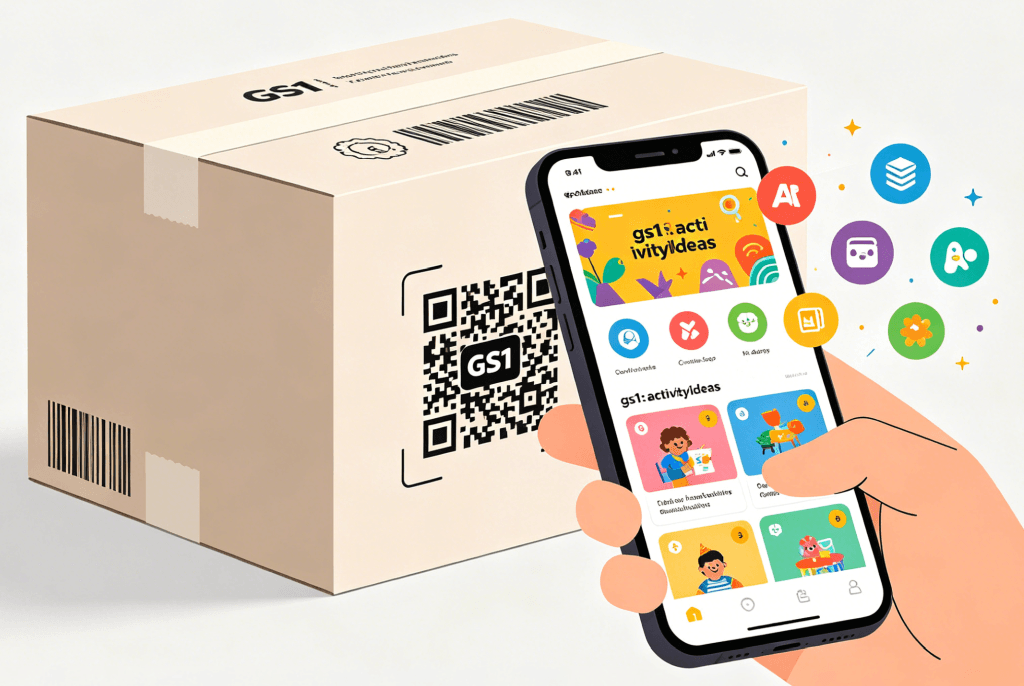
Traditionally, job postings rely on a company’s “Careers” page on its website or on third‑party job platforms. Job seekers must actively search, remember URLs, or depend on search engines. With gs1:careersInfo, the entry point to employment information is embedded directly into the entity itself – whether on product packaging, equipment nameplates, factory entrances, hospital lobbies, or retail stores. Anywhere a GS1 identifier exists can become a gateway to career opportunities.
2.2 Enhancing the Credibility of Job Information
In an era of recruitment fraud and information opacity, job seekers often struggle to verify the authenticity of job postings. gs1:careersInfo is built on the GS1 global standards system – GS1 identifiers are subject to strict registration and vetting processes. When job seekers obtain career information by scanning a QR code carrying a GS1 identifier, the trustworthiness of the information source is fundamentally guaranteed.
2.3 Reaching Target Audiences with Precision
Different products and different locations correspond to different talent needs. The packaging of a high‑end medical device attracts professionals interested in that specific technology field; a QR code at a factory gate attracts skilled blue‑collar workers from the surrounding community. gs1:careersInfo allows recruitment information to be precisely bound to specific product lines or specific geographic locations, enabling “contextual recruitment”.
2.4 Reducing Maintenance Costs for Recruitment Information
Under traditional models, when a company changes its recruitment system or updates its careers page URL, it often has to reprint all promotional materials. With gs1:careersInfo, the company only needs to update the link target once in the resolver backend – and all QR codes already printed on packaging, nameplates, and posters will automatically point to the new careers page. This “print once, last forever” model significantly reduces information maintenance costs.
2.5 Expanding the Application Boundaries of GS1 Digital Link
The value of gs1:careersInfo extends beyond recruitment itself. It signals that GS1 Digital Link use cases are evolving from “product information lookup” to “organisational information interaction”. Through this link type, GS1 identifiers are no longer just product codes in the supply chain; they become standardised entry points for organisations to exchange information with the outside world – job seekers, partners, and the general public.
3. Typical Application Scenarios
Scenario 1: Manufacturing – “Contextual Recruitment” at Factory Sites
A large automotive manufacturer places QR codes containing gs1:careersInfo at the entrances, employee cafeterias, and production workshops of its manufacturing bases across the country. The approach is as follows:
- Assign a unique GLN (Global Location Number) to each production base.
- Configure, in the GS1 Digital Link platform, the
gs1:careersInfolink for each GLN to point to that site’s recruitment page. - Generate and display the QR codes containing the digital link.
- Job seekers scan the QR code, view open positions, and apply online.
This model puts recruitment information in front of the people most likely to be interested – potential job seekers passing by the factory gate every day, as well as current employees (useful for internal referrals).
Scenario 2: Healthcare – Enhancing Professional Credibility of Job Listings
In the healthcare sector, gs1:careersInfo is particularly valuable. The medical industry demands the highest levels of information accuracy and security, and talent turnover is frequent. By associating gs1:careersInfo with a healthcare facility’s GLN:
- Job seekers scanning QR codes at hospital lobbies or department entrances can directly access the latest physician and nurse recruitment information.
- Using
gs1:careersInfoon medical devices and pharmaceutical packaging helps attract professionals interested in that specific technology domain. - Because GS1 identifiers are subject to strict registration and verification, job seekers have significantly higher trust in the recruitment information.
Scenario 3: Retail and Consumer Goods – Deepening Brand‑Consumer Connections
A global consumer goods brand prints GS1 QR codes containing gs1:careersInfo on its best‑selling product packaging. After purchase, consumers scan the code and not only see product information but also discover career opportunities with the brand worldwide. This approach extends the brand‑consumer relationship from a “transaction” to a “potential employment relationship” – particularly effective for product categories with high brand loyalty, where consumers would be proud to become part of the brand.
Scenario 4: Logistics and Supply Chain – Recruitment Gateways at Warehouses and Distribution Centres
Large logistics companies place or print QR codes containing gs1:careersInfo at the entrances of distribution centres and warehouses, as well as on equipment like forklifts and pallets. Job seekers for positions such as warehouse operators and drivers, when passing by or working nearby, can scan the code to see the latest hiring needs at that site. This embedding of recruitment entry points into the work environment greatly improves the reach of job information.
4. Complete Usage Example
Below is a JSON example showing how a manufacturing company would configure gs1:careersInfo link data in a GS1‑compliant resolver for a production site:
{
  "anchor": "/414/9506000112345",
  "itemDescription": "East China Production Base - Suzhou Factory",
  "defaultLinktype": "gs1:locationInfo",
  "links": [
    {
      "linktype": "gs1:locationInfo",
      "href": "https://www.example.com/location/suzhou",
      "title": "Factory Location & Contact",
      "type": "text/html",
      "hreflang": ["zh-CN"],
      "context": ["general"]
    },
    {
      "linktype": "gs1:careersInfo",
      "href": "https://careers.example.com/suzhou-factory",
      "title": "Suzhou Factory - Join Us",
      "type": "text/html",
      "hreflang": ["zh-CN"],
      "context": ["manufacturing", "blue-collar"]
    },
    {
      "linktype": "gs1:careersInfo",
      "href": "https://careers.example.com/en/suzhou-factory",
      "title": "Suzhou Factory - Join Us",
      "type": "text/html",
      "hreflang": ["en"],
      "context": ["manufacturing", "blue-collar"]
    },
    {
      "linktype": "gs1:homepage",
      "href": "https://www.example.com",
      "title": "Corporate Website",
      "type": "text/html",
      "hreflang": ["zh-CN"],
      "context": ["general"]
    }
  ]
}
Field Descriptions
| Field | Meaning |
|---|---|
anchor | The resolver’s routing anchor. Here we use 414/ (the GS1 Application Identifier for GLN) plus the GLN, indicating a location entity. |
defaultLinktype | The default fallback link type. If the resolver cannot match any specific condition, it redirects to this link (usually a location information page). |
links | The core array of rules. Multiple links can be configured here. |
linktype | The link type. Here it is gs1:careersInfo, indicating an employment‑information link. |
href | The actual landing page URL – the company’s job‑information page. |
title | The title of the link, displayed by the resolver or scanning tool. |
type | Content type, typically text/html. |
hreflang | Language adaptation. Based on the user’s browser language preference, the resolver returns the corresponding language version of the careers page. |
context | Context tags for further refinement of distribution rules (e.g., distinguishing “blue‑collar recruitment” from “management roles” sub‑scenarios). |
User Scanning Workflow
- Scan – A job seeker scans the GS1 QR code on a factory entrance, product packaging, or promotional material using a GS1‑compatible scanning tool (e.g., phone camera, WeChat, etc.).
- Resolution – The scanning tool sends a request to the GS1 resolver. The resolver matches the most appropriate link based on the request parameters (e.g.,
linkType=gs1:careersInfo). - Redirect – The system automatically directs the user to the company’s pre‑configured careers information page.
- Browse & Apply – The user views open positions, learns about the company culture, and submits an application online.
Advantages of This Approach
- Concise QR codes – The QR code contains only the basic path (e.g.,
/414/9506000112345); all employment information is configured in the cloud. - Dynamic distribution – The same QR code can automatically return the careers page in Chinese or English based on the user’s language (
hreflang). - Instantly updatable – When job listings or recruitment content changes, only the resolver backend’s
hreftarget or the careers page content needs to be updated – no reprinting of any materials is required. - Multi‑dimensional association – Can be flexibly linked with various GS1 identifiers: GLN (location), GTIN (product), GRAI (asset), etc.
- Traceable data – The resolver backend can track access statistics for each
gs1:careersInfolink, helping companies understand the recruitment conversion performance of different channels.
Summary
gs1:careersInfo is a highly promising standardised link type within the GS1 Digital Link ecosystem. With its clear definition – “a link to information about jobs, careers, or other employment opportunities associated with an organisation or location” – it builds a standardised, trustworthy, and continuously updatable information bridge between organisations, locations, and job seekers.
While product traceability answers “where it comes from” and product information answers “what it is”, gs1:careersInfo addresses a new question about an organisation’s connection with the outside world: “Who wants to join?” – Who is interested in joining this organisation? Who is interested in career opportunities at this location?
Whether it is manufacturing factories implementing contextual recruitment, healthcare institutions enhancing the professional credibility of job listings, or consumer brands turning customers into potential employees, gs1:careersInfo offers organisations a standardised, scalable, and low‑cost approach to talent attraction – turning every GS1 identifier into a potential recruitment gateway.