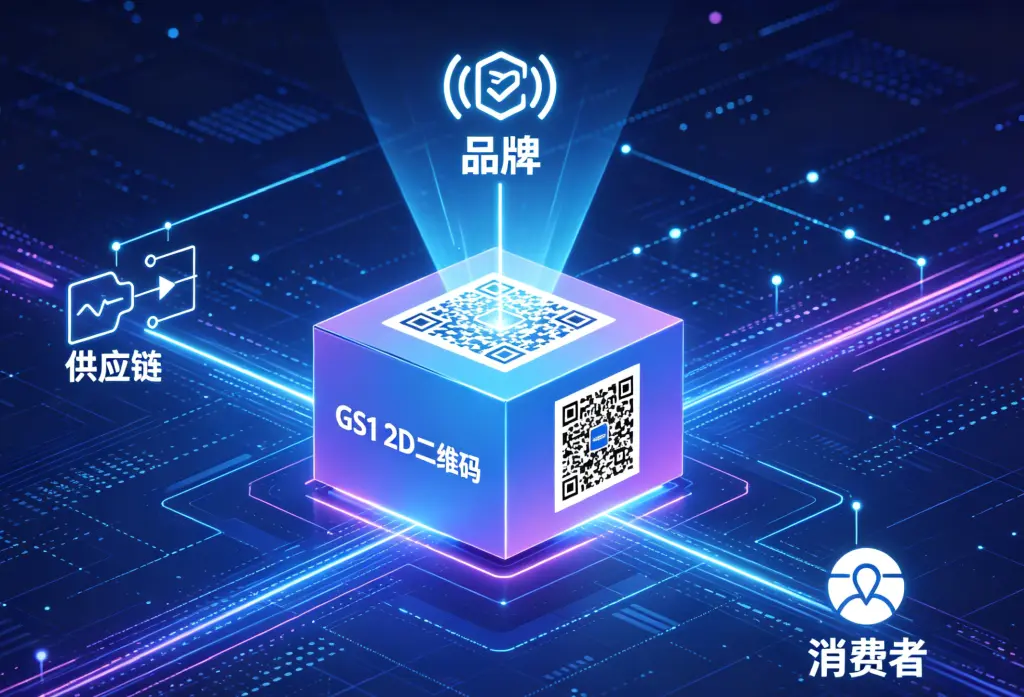

As the industry-wide “Sunrise 2027” initiative — the transition to 2D barcode acceptance at retail point-of-sale — moves toward full implementation, the apparel and general merchandise sector is undergoing a systematic upgrade to its identification infrastructure. Traditional 1D UPC barcodes, which only carry a single Global Trade Item Number (GTIN), can no longer meet the growing demands for granular inventory management, end-to-end traceability and immersive consumer engagement.
Published by GS1 US in collaboration with retailers, brands and solution providers across the industry, the guide Unlocking the Benefits of 2D Barcodes in Apparel and General Merchandise breaks down technology options, core use cases and implementation roadmaps, helping brands and retailers navigate the transition and capture the full value of unique item identification through standardized GS1 systems.
1. Fundamentals: Key Differences Between 1D and 2D Barcodes
Traditional linear (1D) barcodes such as UPC-A and EAN-13 are designed primarily for price lookup at checkout. Most encode only a GTIN, offer extremely limited data capacity and require larger print areas.
Two-dimensional (2D) barcodes remove these limitations: they pack GTIN plus multiple data elements — such as batch/lot numbers, serial numbers and country of origin — into a smaller footprint, and include built-in error correction for more reliable scanning. The two dominant 2D symbologies in apparel and general merchandise are GS1 DataMatrix and QR Code.
2. Leading 2D Symbologies and Use Cases
GS1 DataMatrix
GS1 DataMatrix is the GS1-standardized subset of Data Matrix, purpose-built for encoding GS1 Application Identifier (AI) element strings. Its compact size and compatibility with a wide range of substrates make it ideal for B-end supply chain scenarios and small hangtags.
Note that within the GS1 system, plain Data Matrix is used exclusively for encoding GS1 Digital Link URIs. Because the two formats are visually nearly identical, best practice is to use only one symbology per package to avoid confusion for scanners and end users.
QR Code
QR Codes are the most recognizable 2D format for consumers, scannable by standard smartphone cameras without dedicated apps, making them the industry preferred choice for customer-facing engagement.
When upgraded to GS1 Digital Link URI syntax, on-pack QR Codes deliver dual functionality: they support POS checkout and also direct shoppers to brand-controlled digital content — all without adding extra labels or taking up more packaging space. Note that QR Codes shall only be encoded in URI format, not in GS1 element string syntax.
3. GS1 Digital Link: Turning Barcodes Into Gateways to the Digital World
GS1 Digital Link is a standard protocol that converts GS1 identifiers into web-resolvable URIs, transforming barcodes from simple number carriers into digital entry points:
- Built on globally unique GS1 identifiers such as GTIN, it links directly to brand-managed, real-time online information;
- It unifies supply chain traceability data, business APIs and consumer-facing content under one single identifier, bridging B2B and B2C use cases;
- It supports context-aware and role-based content delivery, forming the technical foundation for multi-scenario 2D barcode value.
4. Three Core Use Cases for Apparel & General Merchandise
With the ability to carry GTIN plus additional GS1 Application Identifiers, 2D barcodes unlock value across inventory management, traceability & compliance, and consumer engagement.
Inventory & Operations: From Bulk Management to Item-Level Precision
Combined with serial numbers (AI 21) for item-level serialization — and amplified by RAIN RFID technology — 2D barcodes drive operational efficiency:
- Serialized sales data: Scanning SGTIN at POS delivers far richer sales insights than standard GTIN alone, supporting merchandising planning and assortment decisions.
- In-store operations: Associates can scan to view planograms, markdown lists and quickly identify items for recall or removal from shelves.
- Streamlined returns: Item-level identification accurately pinpoints the original sales channel and location, eliminating the need for extra return labels and simplifying reverse logistics.
- Mis-mate prevention: For paired items such as footwear, swimwear and suits, 2D barcodes verify complete sets at returns, reducing loss from mismatched inventory.
- Loss prevention & anti-fraud: Combined with RFID, 2D barcodes detect unsold items leaving the store; serialized data blocks fraudulent returns without receipts, cutting shrinkage.
Traceability & Compliance: Meeting Global Regulatory and Sustainability Mandates
Adding data elements such as country of origin (AI 422) and batch/lot number (AI 10) enables full-chain traceability:
- Supply chain visibility: Country-of-origin data supports end-to-end tracking from raw materials to point of sale.
- Sustainability disclosure: Batch-level and serialized data underpins claims for organic cotton, recycled materials and other certifications with production provenance.
- Global regulatory readiness: 2D barcodes support emerging rules such as the EU Digital Product Passport, enabling full product lifecycle tracking from source to consumer.
- Customs efficiency: Barcodes can carry HS codes, fill details, hazardous material attributes and other data required for customs, accelerating cross-border clearance.
Consumer Engagement: From One-Time Transaction to Long-Term Brand Connection
Consumers can scan with their smartphones to access brand-owned content and extend the shopping experience:
- Care & maintenance instructions: Links to detailed washing and care guidance, replacing lengthy text on hangtags and reducing packaging clutter.
- Expiration & usage guidance: For cosmetics and dated merchandise, displays expiration dates and proper disposal instructions.
- Promotions & marketing: In-store scanning unlocks exclusive offers and campaign content, with messaging updatable in real time.
- Sustainability & circularity: Shares eco-label information and provides instructions for proper recycling and reuse to advance the circular economy.
- Authenticity verification: Directs shoppers to official authentication pages to confirm genuine products and build trust.
5. Key Preparation Steps for Sunrise 2027
- Size planning: 2D barcode dimensions increase with data volume. Evaluate required data elements early to fit hangtag and packaging layouts.
- Dual-marking transition: 1D and 2D barcodes will coexist during the transition period. Plan hangtag and packaging layouts to accommodate both formats.
- Hardware & software upgrades: Validate POS scanner compatibility with vendors early, and upgrade backend systems to store and process serial numbers, batch data and other extended attributes.
- Sewn-in labeling: Embed 2D barcodes in care labels or inside products to preserve identification and anti-counterfeiting capability even after hangtags are removed.
Closing
The shift to 2D barcodes is more than a packaging update — it is the digital foundation for end-to-end transformation in apparel and general merchandise. Sunrise 2027 represents both a compliance milestone and a strategic opportunity for brands to boost supply chain efficiency, elevate consumer experiences, and advance sustainability and global regulatory readiness. Built on global GS1 standards, a single 2D barcode can serve both B2B operations and B2C brand engagement at scale.