
1. What is gs1:backgroundInfo?
Within the GS1 Digital Link framework, gs1:backgroundInfo is a standardised link type specifically designed to deliver “background information”. According to the official definition in the GS1 Web Vocabulary, it is a link to information – typically from the owner of the identified entity – about the creative background, thought leadership, or influence of that entity.
More concretely, this type of information may include:
- Inspiration – where did the product idea come from?
- Innovations in the development process – what challenges were overcome and what breakthroughs were achieved during R&D?
- Literary or creative approaches – for publications or content‑based products, what creative techniques were used?
- The science or technology employed – what cutting‑edge technologies are behind the product?
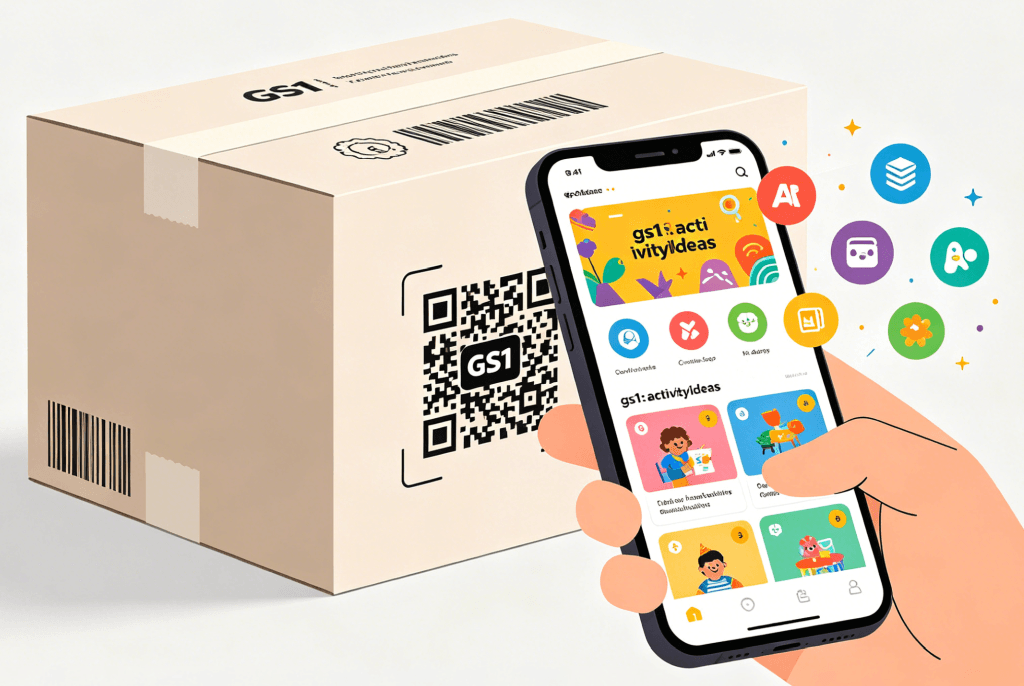
In the GS1 Digital Link resolution mechanism, when a user scans a GS1‑encoded QR code and makes a request to the resolver with the parameter linkType=gs1:backgroundInfo, the resolver does not redirect to a product specifications page or a nutrition facts panel. Instead, it precisely redirects to the brand‑designated “story” page that has been pre‑configured for that entity.
How it differs from other link types
Within the GS1 standardised link‑type system, gs1:backgroundInfo has a clear and distinct role from several common link types:
| Link Type | Question It Answers | Content Source |
|---|---|---|
gs1:pip (Product Information Page) | What is the product? (specs, parameters) | Brand / Manufacturer |
gs1:nutritionalInfo | What does it contain? | Brand / Manufacturer |
gs1:certificationInfo | Who certified it? | Third‑party certifiers |
gs1:backgroundInfo | Where did it come from? Why was it made? | Brand’s own narrative |
Together, these four types form a complete information matrix. gs1:backgroundInfo sits in the quadrant of “deep, brand‑owned narrative” – content that cannot be accommodated on a simple product specification page.
2. Core Value of gs1:backgroundInfo
2.1 Responding to consumers’ demand for “stories”
Consumer purchasing decisions are shifting from “spec‑by‑spec comparison” to “value identification”. Market research shows that more than 60% of global consumers are willing to pay a premium for products from sustainable brands. However, when consumers want to verify a brand’s “sustainability” claims, product labels rarely provide enough evidence.
gs1:backgroundInfo offers exactly that – an entry point to show the full picture: why the raw materials were sourced from a particular region, which traditional craftsmanship the artisans follow, and what unmet need inspired the product’s development. This is not about feeding consumers marketing slogans; it is about providing verifiable clues to the creative logic behind the product.
2.2 Knowledge documentation of the innovation process
In B2B contexts – such as industrial equipment and medical devices – the value of gs1:backgroundInfo leans more toward systematic documentation. The creation of a high‑end medical device may involve breakthroughs in materials science, published papers in specialised journals, and years of laboratory research.
When a hospital procurement officer or clinical engineer scans the QR code on the device, the content delivered via gs1:backgroundInfo might not be a consumer‑facing brand video. Instead, it could be the core technical principles, clinical study findings, and key decision‑making rationale from the R&D process. This information may be too detailed for consumer products, but in a purchasing evaluation scenario, it provides exactly the depth of information required for a professional buying decision.
2.3 Extending the brand narrative space
Traditional product packaging is limited by physical space and can carry only a small amount of information. gs1:backgroundInfo attaches unlimited digital narrative space to every physical product via a single QR code link. Brands no longer need to crowd packaging with text; a single unified GS1 Digital Link QR code allows consumers to scan and go directly to the brand’s “story page”.
3. Typical Application Scenarios
Scenario 1: Food & Agricultural Products – Telling the Story of Origin and Heritage
A bottle of olive oil can tell you its origin, acidity, and processing method – but it cannot tell you that the current estate owner is the fourth‑generation successor, whose great‑grandfather planted the first olive trees in the late 19th century after a severe drought destroyed all the vineyards. These stories are not printed on the label, but they can be delivered to every scanning consumer via gs1:backgroundInfo. From the growing altitude of coffee beans to the philosophy behind wine‑making, from the transition journey of an organic farm to the century‑long persistence of a family brand – gs1:backgroundInfo gives every agricultural product the ability to tell its own story.
Scenario 2: Medical Devices & Industrial Equipment – Presenting Technical Depth
A medical device manufacturer prints GS1 QR codes containing gs1:backgroundInfo on its imaging diagnostic equipment. When hospital procurement officers or clinical engineers scan the code, they do not see a product data sheet – instead, they are shown the core technical principles underlying the device, published clinical research papers, and the innovative approaches used to solve critical challenges during development. This depth of information has irreplaceable value in procurement assessments and academic exchanges.
Scenario 3: Cultural & Creative Works and Publications – Revealing the Creative Process
For a novel, a film, or a design piece, the inspiration behind it, the literary approach, and the artistic pursuit are often among the things audiences are most curious about. Through gs1:backgroundInfo, publishers can attach, to the QR code on the back cover of every printed book, links to author interviews, creative notes, or literary critiques – allowing readers, after enjoying the work itself, to further understand “where it came from”.
Scenario 4: Sustainable Brands – Showcasing Responsibility and Philosophy
For brands that position sustainability as a core value, consumers often want to see the real evidence behind their environmental claims. gs1:backgroundInfo can link to the brand’s sustainability report, raw material traceability stories, carbon neutrality roadmap, and more – ensuring that every environmental promise has verifiable data and a compelling narrative behind it.
4. Complete Usage Example
Below is a JSON example of how a brand would configure gs1:backgroundInfo link data in a GS1‑compliant resolver for a given product:
{
  "anchor": "/01/06933960552835",
  "itemDescription": "Eco‑Town Organic Olive Oil 500ml",
  "defaultLinktype": "gs1:pip",
  "links": [
    {
      "linktype": "gs1:pip",
      "href": "https://www.example.com/product/12345",
      "title": "Product Details",
      "type": "text/html",
      "hreflang": ["zh-CN"],
      "context": ["general"]
    },
    {
      "linktype": "gs1:backgroundInfo",
      "href": "https://www.example.com/story/organic-olive-oil",
      "title": "The Story of a Century‑Old Estate",
      "type": "text/html",
      "hreflang": ["zh-CN"],
      "context": ["brand", "heritage"]
    },
    {
      "linktype": "gs1:backgroundInfo",
      "href": "https://www.example.com/en/story/organic-olive-oil",
      "title": "The Story of a Century‑Old Estate",
      "type": "text/html",
      "hreflang": ["en"],
      "context": ["brand", "heritage"]
    }
  ]
}
Field Descriptions
| Field | Meaning |
|---|---|
anchor | The resolver’s routing anchor, corresponding to the GTIN (Global Trade Item Number). When a scan request hits this path, the resolver looks for matching link rules. |
defaultLinktype | The default fallback link type. If the resolver cannot match any specific condition, it redirects to this link (usually a general product page). |
links | The core array of rules. Multiple links can be configured here. |
linktype | The link type. Here it is gs1:backgroundInfo, indicating a background information link. |
href | The actual landing page URL – the brand’s dedicated page containing the background story. |
title | The title of the link, displayed by the resolver or scanning tool. |
type | Content type, typically text/html. |
hreflang | Language adaptation. Based on the user’s browser language preference, the resolver returns the corresponding language version of the background story page. |
context | Context tags for further refinement of distribution rules (e.g., distinguishing “brand narrative” from “heritage story” sub‑scenarios). |
User Scanning Workflow
- Scan – The user scans the QR code on the product using a GS1‑compatible scanning tool (e.g., phone camera, WeChat, etc.).
- Resolution – The scanning tool sends a request to the resolver. The resolver matches the most appropriate link based on the request parameters (e.g.,
linkType=gs1:backgroundInfo). - Redirect – The system automatically directs the user to the brand‑pre‑configured “background story” page.
- Read – The user browses the creative background, technological origins, or brand story behind the product.
Advantages of This Approach
- Concise QR codes – The QR code contains only the basic path (e.g.,
/01/06933960552835); all deep content is configured in the cloud. - Dynamic distribution – The same QR code can automatically return the story page in Chinese or English based on the user’s language (
hreflang). - Instantly updatable – When the background story content changes, only the resolver backend’s
hreftarget needs to be modified – no reprinting of packaging is required. - Traceable data – The resolver backend can track access statistics for each
gs1:backgroundInfolink, helping brands understand consumer interest in story‑based content.
Summary
gs1:backgroundInfo is a highly valuable but often underappreciated standardised link type within the GS1 Digital Link ecosystem. With its clear definition – a link to creative background, thought leadership, or influence information – it builds a standardised bridge between physical products and deep narratives. While product specification pages answer “what”, and nutrition information answers “what’s in it”, gs1:backgroundInfo answers “where it came from” and “why it was made”. Whether it is consumer brands telling stories of origin and heritage, medical device manufacturers presenting technical depth, or cultural works revealing creative processes, gs1:backgroundInfo provides entities with a standardised, scalable, and traceable way for every product to tell its own story.